 All 5 Star Reviews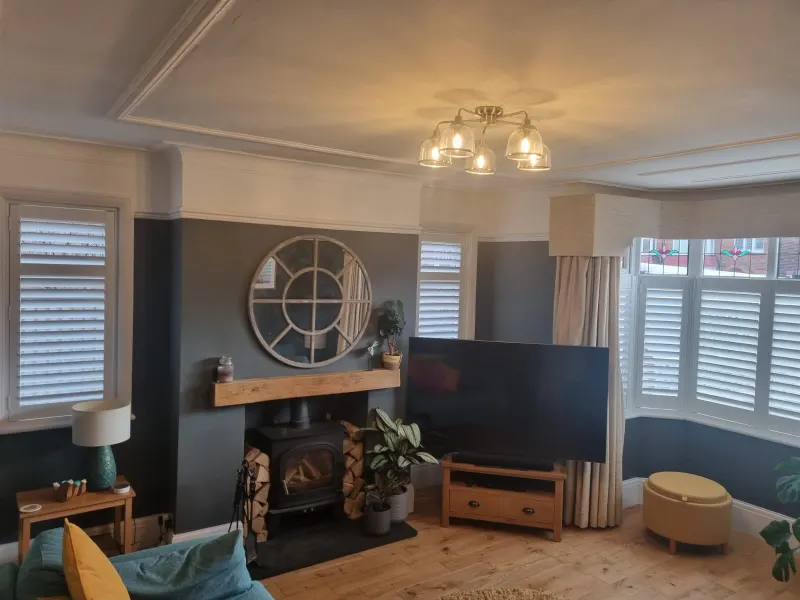
Shutters and Curtains: Do You Need Both, and How to Pair Them
It is one of the most common questions we hear once someone has decided on shutters: "Do I still need curtains?"
The short answer is no. Plantation shutters are a complete window dressing on their own. They give you privacy, light control, insulation and a finished look without anything else at the window. Most of the homes we fit across Grimsby, Cleethorpes and Lincolnshire have shutters alone, and they look wonderful.
The longer answer is that curtains can still earn their place in certain rooms, and when they do, the two work beautifully together. This guide covers when curtains add something, when they do not, and how to pair them well if you want both.
Do you need curtains with shutters?
No. This is worth saying plainly because plenty of people assume shutters are a first layer, like a blind, that needs something soft over the top. They are not.
A well-fitted shutter closes fully, blocks the view in, cuts out most of the light and adds a genuine layer of insulation against the glass. It is a permanent, made-to-measure piece of joinery that finishes the window in its own right. That is a big part of why people choose shutters over blinds in the first place: the window is done, and there is nothing else to buy, hang, wash or replace.
So if you are asking because you are worried the room will look bare, you can relax. If you are asking because you like the look of fabric or want a specific benefit from it, read on.
When curtains genuinely help
There are four situations where we would happily suggest adding curtains alongside your shutters.
Bedrooms where total darkness matters. Shutters cut out a great deal of light, but a louvred shutter is not pitch black. Light can find its way around the edges of the louvres, especially on a bright summer morning. If you or your children are sensitive sleepers, a pair of blackout-lined curtains over the shutters gets you to complete darkness. If you would rather not have curtains, our blackout shutters and solid panel shutters are the alternative route.
Softening a large or hard-surfaced room. Shutters are crisp and architectural. In a room with a lot of hard surfaces, such as a big living room with wooden floors and little upholstery, a pair of curtains adds fabric, colour and warmth and helps with acoustics too. This is a design choice rather than a practical one, and it is a very good one.
Extra warmth on older or draughty windows. Shutters already help you keep the heat in by trapping a layer of still air against the glass. Lined curtains drawn over the top add another layer on a bitter night. On a single-glazed period window in particular, the difference is noticeable.
Bringing colour and pattern into a room. Shutters are usually white or a soft neutral, which is exactly why they suit every home. If you love pattern or a bold accent colour, curtains are the easiest way to bring it in without committing the shutters themselves to a fashion that might date.
When to skip curtains
Just as often, curtains add nothing and simply get in the way.
Bathrooms and kitchens. Steam, splashes and cooking smells are not kind to fabric. This is where waterproof composite shutters come into their own, and a bare shutter looks clean, bright and deliberate.
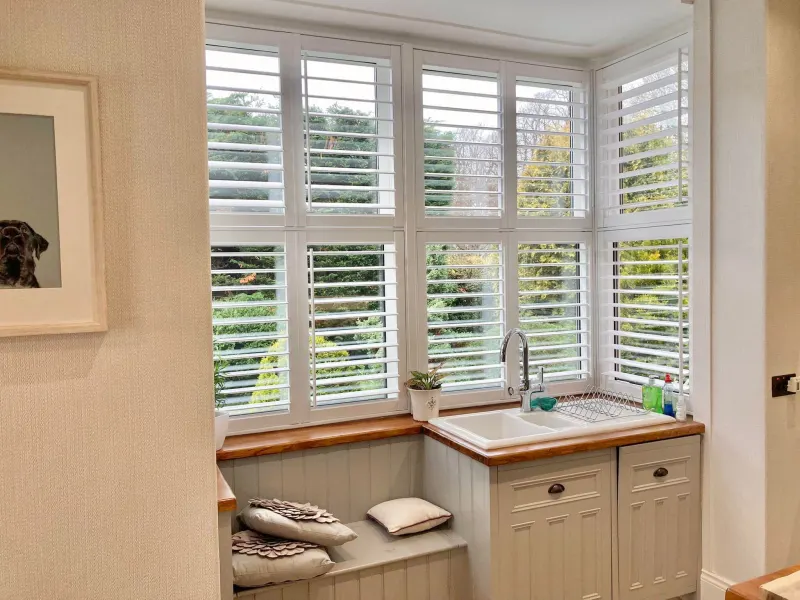
Small windows. A curtain pole and two stacks of fabric can swamp a small window and steal light from the edges of the glass. Shutters alone keep the window looking as large as possible.
Café-style and tier-on-tier shutters. Half-height café-style shutters are chosen precisely so the top of the window stays open to the light. Hanging curtains that cover that top section rather defeats the object. Tier-on-tier works the same way: you already have the flexibility of opening the top and bottom independently, so curtains rarely add much.
Windows with radiators beneath. Floor-length curtains over a radiator trap the heat behind the fabric. Shutters sit within the window recess and leave the radiator free to do its job.
Where you want low maintenance. One of the reasons people move from curtains to shutters is to stop the cycle of washing, ironing and rehanging. If that is you, do not put it straight back.
How to pair curtains with shutters
If you have decided you want both, a few simple rules make all the difference.
Fit the shutters first
Always. Shutters are made to measure to the millimetre and the frame needs to sit properly within or around the recess. Curtains are the easy part and should be planned around the finished shutters, not the other way round. If you already have curtains and are adding shutters, tell your designer at the home visit so the frame style can be chosen to suit.
Mount the pole high and wide
The curtain pole should sit well above the top of the shutter frame, ideally 15 to 20 cm, and extend beyond the recess on each side so the curtains stack back clear of the window when open. That way the shutters remain fully accessible and the louvres can be tilted without fabric in the way. It also makes the window feel taller and more generous, which is a happy side effect.
Keep the fabric off the shutters
The stacked curtains should hang beside the shutters, not over them. If the curtains sit in front of the louvres when open, you lose the light control that made you choose shutters in the first place, and you will find yourself constantly pushing fabric aside. Wide stack-back is the answer.
Choose the right weight
Because the shutters are doing the practical work, the curtains do not need to be heavy. A linen, a light wool or a simple cotton hangs beautifully and keeps the look relaxed. Save heavy, interlined fabrics for bedrooms where blackout or warmth is the goal.
Match the whites, or contrast deliberately
Most shutters are painted in a soft or pure white. If your curtains are also white or off-white, check the two side by side before you commit, because a cool white next to a warm cream can look accidental. Either match them closely or go for an obvious contrast: a deep colour, a natural linen or a pattern that clearly means to be different.
Keep the hardware quiet
Slim poles in a finish that echoes the room's other metalwork, and simple finials, let the shutters remain the architectural feature. Ornate, chunky poles fight with the clean lines of the louvres.
Bay window shutters and curtains
Bay windows deserve a special mention because they are where people most often want both, and where it is easiest to get wrong.
Shutters are the natural choice for a bay. Each panel is made for its own section of the window, so the shutters follow the angles exactly and the bay keeps its shape and its light. Curtains in a bay, by contrast, need a bay pole or track that bends around the corners, and even then the fabric tends to cut across the recess and hide the very feature you are trying to show off.
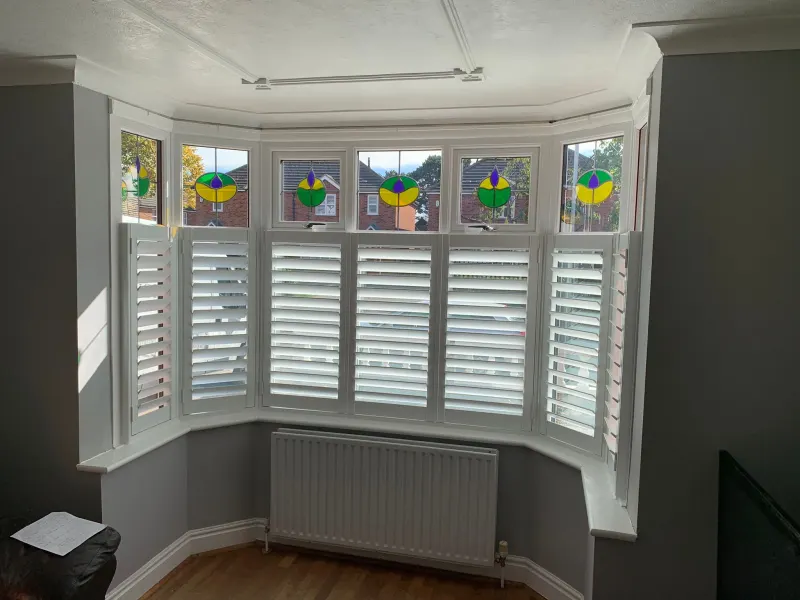
If you do want fabric in a bay, our advice is to treat the curtains as a frame rather than a covering. Hang a single pair on a straight pole across the front of the bay, outside the recess, so they draw back to the walls either side and leave the shutters and the whole bay visible. This gives you the softness and the colour without losing the architecture, and it is far simpler and cheaper than a shaped bay pole.
Not sure which sort of bay you have? Our guide to bay window shapes will help you work it out.
Shutters vs curtains: if you can only have one
Some people find this page while still deciding between the two, so here is the honest comparison.
Curtains win on cost up front, on the range of colours and patterns, and on softness. They lose on privacy during the day (open for light means open to the street), on light control (they are either open or closed), on insulation when open, on longevity and on upkeep.
Shutters cost more at the outset, but they are a one-off. They give you privacy and daylight at the same time by angling the louvres, they insulate the glass all year, they never need washing, they add value to the house and they will outlast several sets of curtains. We have written more about the trade-offs in our blinds vs shutters guide, and most of it applies here too.
Our view, unsurprisingly, is that shutters are the better long-term investment for the window itself. Curtains are then a pleasure to add where they suit, rather than a necessity.
Frequently asked questions
Do you need curtains with plantation shutters?
No. Shutters are a complete window dressing on their own, giving privacy, light control and insulation. Curtains are an optional addition for softness, extra blackout or extra warmth.
Can you have curtains and shutters together?
Yes, and they look lovely together when done well. Fit the shutters first, mount the pole high and wide of the frame, and make sure the curtains stack back clear of the louvres.
Do you hang curtains over shutters or beside them?
Beside them. The pole sits above the shutter frame and extends past the recess so the open curtains hang against the wall on either side, leaving the shutters fully usable.
Are shutters or curtains better for keeping heat in?
Shutters insulate the glass whenever they are closed and also help when they are open by breaking up draughts around the frame. Lined curtains add a further layer at night. Together they are better than either alone.
Do bay window shutters work with curtains?
Yes. The simplest approach is shutters in the bay and a single pair of curtains on a straight pole across the front of the recess, so they draw back to the walls and leave the whole bay on show.
Are shutters blackout on their own?
Louvred shutters block most light but a little can show around the louvre edges. For total darkness choose solid panel shutters, our blackout shutter option, or add blackout-lined curtains.
Most windows do not need anything more than a beautiful set of shutters. If you want fabric as well, we will tell you honestly whether it will help, and how to hang it so the shutters stay fully usable.
Talk it through with us
Every home is different, and the right answer often depends on the room, the window and how you live in it. Our designers see hundreds of windows a year across Grimsby, Cleethorpes and the wider Lincolnshire area, and they are happy to advise on curtains as well as shutters, even though we only make the shutters.
Our Free Measuring & Design Service includes:
- Honest advice from our experts
- Quality samples to view at home
- A no-obligation, tailored quote
Call us today on 01472 927 011, send us a message, or book a free home design visit. We'll be happy to help.
Ask the Experts
Call our friendly Expert team today for assistance; we're always more than happy to help in any way we can: 01472 927 011
We can book you in for a FREE home measuring appointment and design consultation at a time convenient to you! From the comfort of your own home, we will provide samples of our Shutters, talk you through our ranges and style options and accurately measure your window(s) before putting together a NO-OBLIGATION quote tailored to your bespoke needs!